
How to Introduce a Toothbrush to Your Baby
Reviewed by Dr. Michael K. Wilkerson, DDS, pediatric dentist in Boerne, TX
Quick Summary
To introduce toothbrush habits, start by wiping your baby's gums daily with a clean, damp cloth wrapped around your finger before the first tooth appears, which gets them used to mouth contact. When ready, follow a staged plan over one to two weeks: let your baby explore the brush, touch one tooth, then build to twice-daily brushing.
- Start brushing with a rice-grain smear of fluoride toothpaste as soon as the first tooth appears, usually between 6 and 12 months.
- Choose a baby toothbrush with a small head, soft nylon bristles, and a handle you can grip with one hand.
- In the lap position, lay your baby face-up with the head toward your stomach and feet toward your knees.
- Hold the brush at roughly a 45-degree angle so bristles reach the gumline where plaque collects first.
- Book the first dental visit within six months of the first tooth appearing, and no later than the first birthday.
Table of Contents
- Start Early: Cleaning Gums Before the First Tooth
- When to Start Brushing Baby Teeth With Toothpaste
- Choosing a Baby Toothbrush: Size, Bristles, and Handle
- How to Position and Hold Your Baby While Brushing
- A Step-by-Step Plan to Introduce the Toothbrush Gradually
- Brushing Baby Teeth at 1 Year Old: Routine and Resistance
- Picking the Right Toothbrush for a 1 Year Old Baby
- When to Book Your Baby's First Dental Visit
- First Visits at The Kid’s Place in Boerne
- Frequently Asked Questions
Start Early: Cleaning Gums Before the First Tooth
You do not need to wait for a tooth to introduce toothbrush habits and start oral care. Wiping your baby's gums each day gets them used to having their mouth touched, which makes the first toothbrush far less of a surprise. The American Academy of Pediatric Dentistry recommends cleaning the gums this way even before the first tooth.
Here is one way to do it:
- Wash your hands, then wrap a clean, damp cloth around your finger
- Sit your baby in your lap, head resting against you
- Rub the cloth gently along the upper and lower gums
Many parents find that a baby who has been handled this way for weeks accepts a toothbrush more easily. The mouth is already familiar territory. For a wider set of answers on first visits and early care, our parent guides cover the questions we hear most.
When to Start Brushing Baby Teeth With Toothpaste
Start brushing twice a day with fluoride toothpaste as soon as the first tooth appears, usually between 6 and 12 months.
The amount matters more than the brand. Under age 3, use a smear the size of a grain of rice, as recommended by the American Academy of Pediatric Dentistry and the CDC. Press it into the bristles so less ends up swallowed.
Keep the toothpaste tube out of your baby's reach, and use only a small amount placed on the brush. If you want the exact amounts by age, read our guide on how much toothpaste for a 1 year old.
Choosing a Baby Toothbrush: Size, Bristles, and Handle
A baby toothbrush is a small brush with soft bristles and a compact head, sized for an infant mouth. The right one fits easily inside the cheek and reaches the back molars without gagging your baby.
Look for these features:
- Small brush head that covers one or two teeth at a time
- Soft-bristled nylon, never firm or medium
- A handle you can grip with one hand while the other steadies your baby
An infant toothbrush often comes with a longer handle or a finger-grip design. Both work. What matters is control in your hand, not the packaging.
Toothbrush Selection by Age and Sensory Preference
Age tells you the size. Temperament tells you the style.
- Under 1 year: a finger brush or a tiny infant brush with a wide handle
- 1 to 2 years: a small-headed baby toothbrush with soft bristles
- Sensory-sensitive babies: try a brush with a textured grip, or let them hold a second brush while you clean
A common mistake is buying a brush sized for a preschooler. It is too big for an infant mouth and makes brushing feel like a fight.
How to Position and Hold Your Baby While Brushing
Positioning is the part most guides skip, and it decides whether brushing works. A baby who feels secure in your lap tolerates the brush far longer than one held upright and squirming.
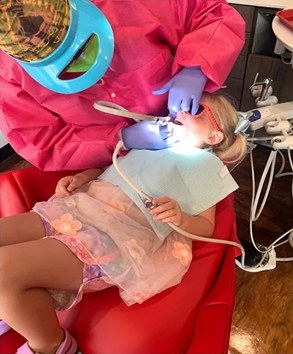
Try these holds:
- Lap position (best for infants): sit on the floor with your legs apart. Lay your baby face-up with the head toward your stomach and feet toward your knees. Your non-dominant hand cradles the head; your dominant hand holds the brush. This gives you a direct view of the upper teeth.
- Cradle hold: tuck your baby's head in the crook of your arm, facing up, with the body along your forearm. Use your free hand to lift the lip and hold the cheek away from the brush.
- Side-by-side at a mirror: sit behind your baby, both facing a mirror, so they watch you brush. This works well once a baby wants to hold the brush themselves.
Whichever you choose, support the head. A steady head means your brush strokes stay gentle and you can see every tooth surface.
Hand Placement and Brushing Motion
The hold matters less than what your hands do once you are in position.
- Lift the lip, don't pry. Use your non-dominant thumb or index finger to gently lift the upper lip and hold the cheek away from the teeth. Never force the mouth open.
- Angle the bristles toward the gumline. Hold the brush at roughly a 45-degree angle so the bristles reach where the tooth meets the gum, which is where plaque collects first (the American Dental Association).
- Use small circles or short back-and-forth strokes. Two to three teeth at a time, front surfaces first, then the chewing surfaces, then the back of the front teeth.
Support the head and keep sessions short rather than holding a baby still by force.
Positioning for Babies With Oral Sensitivities or Gag Reflexes
Some babies gag easily or dislike mouth contact. A few adjustments help:
- Use a slimmer brush head so less of the brush sits inside the mouth at once.
- Start with the front teeth only and work backward over several sessions.
- Try a finger brush first, which gives you more control over how far into the mouth you go.
If gagging or avoidance is persistent, raise it with your pediatric dentist.
Book your baby’s first visit at The Kid’s Place →
A Step-by-Step Plan to Introduce the Toothbrush Gradually
Most guides tell you to start brushing when the first tooth appears and stop there.
Here is a practical sequence.
- Familiarize, no brushing (days 1-3). Let your baby hold the brush during play or bath time. Just explore it for a minute. Name it ("toothbrush") so it becomes a known object rather than a surprise.
- Touch one tooth (days 3-5). Sit your baby in your lap in one of the positions described above. Touch the bristles to a single front tooth for two or three seconds, then stop and praise.
- Brush the front surfaces (days 5-8). Brush the front teeth in short, gentle strokes, then stop. Do not chase the back teeth yet.
- Add the back teeth (days 8-12). Work from front to back on the upper and lower teeth in short gentle strokes. Keep the session under about 30 seconds of actual brushing.
- Build to twice a day. Morning and bedtime become the fixed slots. Consistency matters more than duration at this stage.
- Toothpaste from the first brushing. Once you’re brushing real teeth (step 3 on), use the rice-grain smear of fluoride toothpaste described above.
Babies accept the brush faster when it is introduced during a calm, familiar routine (after a bath, before bed) rather than when they are hungry or tired.
Watch out: brushing too hard is the most common error. Pressing down on the gums causes soreness, and a sore mouth makes the next brush harder.
What to Do When Your Baby Bites, Chews, or Clamps Down
A baby who bites the brush is not being difficult. Chewing is how they explore, and teething gums feel better under pressure. The response matters more than the behavior.
- Do not yank the brush out. Ease it sideways, pause, and wait for the jaw to relax.
- Give a chilled (not frozen) teething ring before brushing to take the edge off sore gums.
- Try a brush with a chewable handle made for teething babies, so chewing is redirected to a safe surface.
When Your Baby Refuses the Brush Entirely
Some babies reject the brush for days at a time. A few adjustments usually help:
- Let your baby "brush" first with their own brush while you brush yours, then you finish the job.
- Try a different texture: a finger brush, a silicone brush, or a soft-bristled brush with a different head shape.
- Brush in front of a mirror so your baby can watch, which often turns resistance into curiosity.
If resistance persists for more than a couple of weeks, or if your baby gags or avoids all mouth contact, mention it to your pediatric dentist.
Brushing Baby Teeth at 1 Year Old: Routine and Resistance
By the first birthday, most babies have several teeth and a strong opinion about having them cleaned. Resistance at this age is normal, and it usually fades with routine.
What helps:
- Brush at the same two times every day, so it becomes expected
- Let your baby "brush" first, then you finish the job
- Sing the same short song each time
- Put your baby to bed with water only: no bottle or sippy cup of milk or juice after brushing
If your child is deeply anxious about mouth care or dental visits, our team offers help for anxious kids at the dentist, including acclimation visits that let a child warm up before any treatment.
Picking the Right Toothbrush for a 1 Year Old Baby
A toothbrush for a 1 year old baby should have a small head, soft bristles, and a handle short enough for a toddler to hold. At this age, many children want to grip the brush themselves, so a chunkier handle helps.
| Feature | Best choice at 1 year | Why it matters |
|---|---|---|
| Brush head | Small, one-to-two teeth wide | Reaches back teeth without gagging |
| Bristles | Soft nylon | Gentle on new teeth and gums |
| Handle | Short and thick | Toddler can grip it independently |
| Bristle wear | Replace when splayed | Worn bristles clean poorly |
Replace the brush every three to four months, or sooner if your toddler chews the bristles flat.
When to Book Your Baby's First Dental Visit
Book the first dental visit within six months of the first tooth appearing, and no later than the first birthday. Early visits let a dentist check tooth eruption and spot concerns while they are simple to address.
At that visit, a pediatric dentist will:
- Count the teeth and check the gums
- Show you a brushing technique that fits your baby
- Talk through fluoride and feeding habits
If you want to know what happens at that appointment, read our guide on how to prepare a toddler for their first dental cleaning.
First Visits at The Kid’s Place in Boerne
Dr. Michael K. Wilkerson, a board-certified pediatric dentist, has been seeing babies and toddlers for over 30 years in a kids-only office with arcade games, movies and slushies. At your baby’s first visit, we’ll check the first teeth, show you a brushing hold that works for your family, and answer questions about teething, bottles and fluoride.
No dental insurance? Our Piggy Plan membership has a Babies/Tots tier for ages 0 to 2 that includes three exams, three cleanings and three fluoride treatments a year. Call us at (830) 239-5411 or book online.
Brushing a baby’s teeth takes seconds, but the routine you build now shapes their oral health for years.
Frequently Asked Questions
At what age should a baby start using a toothbrush?
As soon as the first tooth comes in, usually around 6 months. Before that, wipe the gums with a clean, damp cloth once or twice a day. Starting early helps your baby get used to the brush before strong opinions set in.
How do I brush a baby's teeth if they resist?
Go gradually. Let your baby hold and explore the brush first, then brush one or two teeth and stop. Use a lap position so you have steady control, sing the same song each time, and keep sessions short. If your baby clamps down or turns away, pause and try again later. Consistency matters more than a perfect brushing every time.
Do babies under 1 need toothpaste?
Yes, once the first tooth appears. Use a smear of fluoride toothpaste the size of a grain of rice, twice a day, as recommended by the American Academy of Pediatric Dentistry and the CDC. Before teeth come in, clean the gums with a damp cloth and water only.
What happens if I don't brush my 1 year old's teeth?
Milk, formula, juice and snacks leave sugars on the teeth, and without brushing, cavities can start even in very young children. Brushing twice a day with a rice-grain smear of fluoride toothpaste, and no bottle or sippy cup of milk or juice at bedtime, protects baby teeth.
When should my baby first see a dentist?
Within six months of the first tooth, and no later than the first birthday. At The Kid's Place in Boerne, first visits are quick, gentle check-ups where we show you a brushing technique that fits your baby. Families without insurance can use our Piggy Plan Babies/Tots tier for ages 0 to 2. Call (830) 239-5411.
🎮 Kids can test their tooth smarts with our free Dental Trivia Challenge.