

Needle-Free Injections for Kids: What Parents Should Know
Reviewed by Dr. Michael K. Wilkerson, DDS, pediatric dentist in Boerne, TX
Table of Contents
- What “Needle-Free” Really Means in Kids’ Dentistry
- What to Ask Before You Book
- Numbing vs. Sedation: What’s the Difference?
- How to Prepare a Child for a Dental Injection
- Costs and Insurance
- Painless Numbing at The Kid’s Place in Boerne
- Frequently Asked Questions
If your child is terrified of shots, you have probably searched for a dentist who offers “needle-free” numbing. This guide explains what that term actually covers, what the different technologies can and can’t do, and what to ask so you can find care that works for your child.
We’ll be upfront: the system we use at The Kid’s Place is not needle-free. It is a computer-controlled system that uses a very fine needle and delivers the medicine so slowly that most kids don’t realize they got a shot. Below, we explain why that distinction matters and how to choose what’s right for your child.
What “Needle-Free” Really Means in Kids’ Dentistry
Parents hear several different things called “needle-free” or “painless” injections. They fall into two main groups, and they work very differently.
Needle-Free Jet Injectors
A true needle-free injector uses a quick burst of pressure to push a tiny stream of numbing medicine through the gum, with no needle at all. For a child whose fear is the sight of a needle, that can be a real help.
They have limits:
- They can’t numb every tooth. Jet injectors work best on upper teeth and front teeth. Lower back molars usually need a conventional injection to get fully numb.
- They aren’t silent or sensation-free. Many kids feel a quick snap or pressure and hear a click, which some children find startling.
- They aren’t widely available. Relatively few pediatric offices use them, and those that do often reserve them for certain procedures.
Computer-Controlled “Painless” Numbing
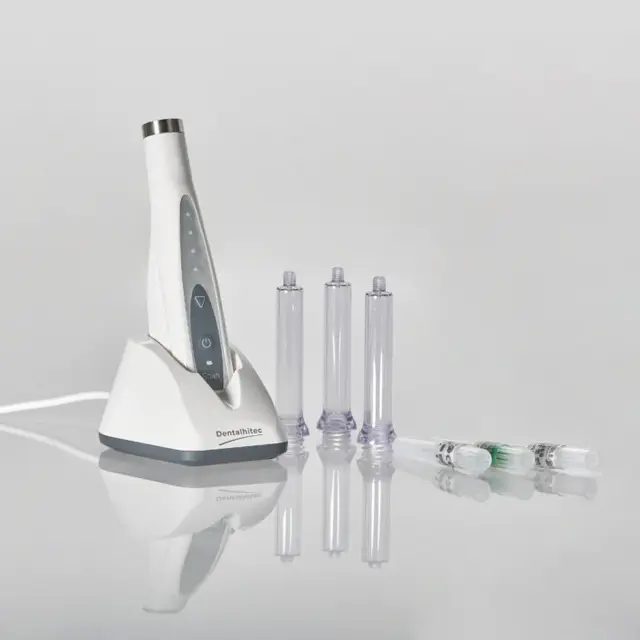
Most of what kids remember as a shot “hurting” is pressure from the medicine going in too fast. Computer-controlled systems fix that. A computer pushes the medicine in at a slow, steady rate through a very fine needle, so the tissue never builds up that uncomfortable pressure.
The handpiece looks more like a pen than a syringe, and the needle is tiny. Combined with numbing gel on the gum first, many children never notice the injection happened. Once the tooth is numb, the numbness is the same as with a traditional injection.
What to Ask Before You Book
A vague promise of “painless injections” tells you very little. These questions turn a website claim into a real answer:
- Which system do you use, by name? An office that can name it can usually explain how it works.
- Is it truly needle-free, or a gentler needle system? Either can be a good fit, but you should know which one before you prepare your child.
- Which teeth and procedures does it cover? Ask whether a traditional injection might still be needed for some work.
- What else do you do for anxious kids? Technology helps, but so do a calm team, a kid-friendly office and options like laughing gas.
- What happens if my child panics? A good office has a plan and will describe it without hesitation.
Numbing vs. Sedation: What’s the Difference?
These two get mixed up all the time. Numbing (local anesthesia) keeps a specific tooth from hurting. Sedation helps a child feel calm enough to get through the visit. They solve different problems, and a child may need one, the other or both.
Even a sedated child still gets local numbing for a filling, so how the numbing is delivered matters either way.
Common sedation options for kids include:
- Nitrous oxide (laughing gas): breathed through a small nose mask. Your child stays awake but relaxed, and it wears off quickly.
- Oral sedation: a medicine taken before the visit that makes your child drowsy and relaxed, with monitoring throughout.
- General anesthesia: your child sleeps through treatment. It is used for severe anxiety, very young children, special needs or extensive treatment, and requires an anesthesia professional and careful monitoring.
| Situation | Gentle numbing alone | Adding sedation |
|---|---|---|
| Child is mainly afraid of the shot | Often enough on its own | Usually not needed |
| Routine filling, mild nerves | Commonly used | Laughing gas can help |
| Severe anxiety or can’t sit still | Helpful but may not be enough | Often recommended |
| Lots of treatment needed | Still used for the numbing | May allow everything in one visit |
The American Academy of Pediatric Dentistry’s behavior guidance describes how pediatric dentists combine communication, numbing and sedation to help children through care.
Book your child’s visit at The Kid’s Place →
How to Prepare a Child for a Dental Injection
Preparation beats reassurance. Telling a nervous child “it won’t hurt” often backfires, because they stop trusting you if they feel anything. Describe what will happen in simple steps instead.
- Use friendly words. “Sleepy tooth medicine” or “the tooth will take a nap” instead of “shot” or “needle.”
- Explain the order. Gel on the gums first, then the sleepy medicine, then the tooth and lip feel puffy and tingly for a while.
- Read a picture book about dentist visits a few days ahead.
- Practice slow breathing together, like blowing out birthday candles.
- Tell the dentist about your child’s fear ahead of time so the team can plan for it.
- Keep your own tone calm. Kids read adult tension quickly.
Costs and Insurance
Numbing is normally part of the cost of the procedure it’s used for, such as a filling. Sedation is usually billed separately, and insurance coverage for it varies a lot between plans. Before treatment, ask the office for an estimate and have them check your benefits so there are no surprises.
Painless Numbing at The Kid’s Place in Boerne
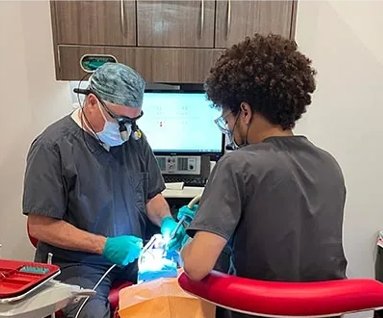
Dr. Michael K. Wilkerson is a board-certified pediatric dentist who has cared for Hill Country kids for over 30 years, and needle-scared kids are a big part of why we do things the way we do.
- DentalHiTech painless numbing: numbing gel first, then a computer-controlled system that delivers the medicine slowly through a very fine needle. Most kids have no idea they got a shot.
- Sedation when needed: laughing gas, oral sedation, and in-office general anesthesia with a visiting board-certified anesthesia professional, so there’s no hospital trip.
- Acclimation visits for very anxious children to get comfortable with the office and team before any treatment.
- An office built for kids: arcade games, movies, massage chairs and free slushies.
If your child is terrified of shots, call us at (830) 239-5411 and tell us what has been hard. We’ll talk you through exactly what your child will feel and make a plan together. You can also read more about how we help anxious kids or our guide on dental anxiety and tooth decay.
Frequently Asked Questions
Are needle-free dental injections painless for kids?
Not completely. Needle-free jet injectors remove the needle, but many kids still feel a quick snap of pressure and hear a click. Computer-controlled systems, which use a very fine needle, deliver the medicine slowly enough that most children don't notice the injection at all. Numbing gel on the gums first helps with either method. Ask your dentist to explain exactly what your child will feel so you can prepare them honestly.
Can a child still need a regular injection if the office has needle-free numbing?
Sometimes. Needle-free jet injectors work best on upper and front teeth, and lower back molars usually need a conventional injection to get fully numb. Ask the office which teeth and procedures their system covers before the visit, so your child isn't surprised.
Is painless numbing the same as sedation?
No. Numbing keeps a specific tooth from hurting, while sedation helps a child feel calm. A child may need one, the other or both. Even a sedated child gets local numbing for a filling, so a gentle numbing technique matters either way.
How can I prepare my child for a dental injection?
Use simple, honest words like 'sleepy tooth medicine,' explain the steps (gel, medicine, then a puffy, tingly feeling), read a picture book about the dentist, and practice slow breathing together. Avoid promising it won't hurt. Tell the dentist about your child's fear ahead of time so the team can plan for it, and praise your child afterward.
Does The Kid's Place use needle-free injections?
No. The Kid's Place in Boerne uses DentalHiTech computer-controlled numbing, which delivers the medicine slowly through a very fine needle after numbing gel, so most kids don't realize they got a shot. For children who need more help, we also offer laughing gas, oral sedation and in-office general anesthesia. Call (830) 239-5411 to talk about your child.