

When Do Baby Teeth Start Falling Out? A Parent's Guide
Reviewed by Dr. Michael K. Wilkerson, DDS, pediatric dentist in Boerne, TX
Quick Summary
Most children start losing baby teeth around age 6 or 7, usually beginning with the two lower front teeth. Kids lose all 20 baby teeth gradually over about six years, finishing around ages 10 to 12. Timing varies, and a year early or late is usually normal.
- The lower front teeth usually go first, then the upper front teeth.
- The “6-year molars” come in behind the baby teeth without replacing any, so they’re permanent from day one.
- Let loose teeth come out on their own; don’t pull a tooth that’s still firmly attached.
- Adult teeth coming in behind baby teeth (“shark teeth”) are common and often sort themselves out.
- Call your dentist for bleeding that won’t stop after 20 minutes of pressure, pain or swelling, or a tooth lost to injury.
Table of Contents
- The Usual Age Baby Teeth Start Falling Out
- Baby Teeth Falling Out Age Chart
- The “6-Year Molars”: New Teeth That Replace Nothing
- Which Baby Teeth Fall Out First
- Losing Teeth Early or Late
- “Shark Teeth”: Adult Teeth Coming In Behind Baby Teeth
- Caring for a Loose or Newly Lost Tooth
- When to Call the Dentist About a Loose Tooth
- Growing Smiles at The Kid’s Place in Boerne
- Frequently Asked Questions
The Usual Age Baby Teeth Start Falling Out
When do baby teeth start falling out? For most children, around age 6 or 7, when the two lower front teeth start to wiggle. It can feel like this milestone arrives all at once, but it’s actually the start of a slow process: kids lose their 20 baby teeth over about six years, usually finishing between ages 10 and 12.
Timing varies from child to child. Some kids lose their first tooth at 5, others not until 7 or 8, and both can be completely normal. A helpful rule of thumb: children who got their baby teeth early often lose them early too.
Baby Teeth Falling Out Age Chart
Here’s the typical timing, based on the American Dental Association’s tooth eruption charts. Use it as a general guide, not a strict schedule.
| Baby tooth | Usually falls out | Replaced by | Adult tooth usually comes in |
|---|---|---|---|
| Central incisors (two front teeth) | 6 to 7 years | Central incisors | Lower 6 to 7, upper 7 to 8 |
| Lateral incisors (beside the front teeth) | 7 to 8 years | Lateral incisors | Lower 7 to 8, upper 8 to 9 |
| First baby molars | 9 to 11 years | First premolars | 10 to 12 years |
| Canines (pointed “eye teeth”) | Lower 9 to 12, upper 10 to 12 | Canines | Lower 9 to 10, upper 11 to 12 |
| Second baby molars | 10 to 12 years | Second premolars | 10 to 12 years |
Notice that the baby molars are replaced by premolars, not molars. The adult molars come in behind the baby teeth instead, which surprises a lot of parents.
The “6-Year Molars”: New Teeth That Replace Nothing
Around age 6 or 7, the first adult molars come in at the very back of the mouth, behind the last baby teeth. They don’t replace a baby tooth, so many parents don’t realize they’re permanent. The second adult molars, the “12-year molars,” follow around ages 11 to 13.
These molars have deep grooves that trap food, and they arrive while kids are still learning to brush. That makes them one of the most cavity-prone teeth. Ask us about dental sealants, a thin protective coating painted into the grooves, once they’ve fully come in.
Which Baby Teeth Fall Out First
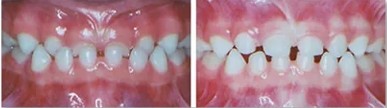
The lower front teeth are usually first, then the upper front teeth. The general order:
- Lower central incisors (bottom two front teeth)
- Upper central incisors (top two front teeth)
- Lateral incisors, the teeth beside the front teeth
- First baby molars
- Canines
- Second baby molars, usually last, around ages 10 to 12
Baby teeth tend to fall out in roughly the same order they came in. If your child’s first loose tooth is a different one, that’s usually still within the normal range.
Losing Teeth Early or Late
A little early (around age 5) is often fine, especially if your child got their baby teeth early. What matters more is why a tooth came out. A baby tooth lost early to decay or injury can leave a gap that neighboring teeth drift into, crowding the adult tooth that’s meant to come in. In that case, your dentist may recommend a space maintainer to hold the spot open.
Late is common too. If your child has no loose teeth by about age 8, or a baby tooth hangs on long after its partner on the other side came out, it’s worth a check. An x-ray shows whether the adult tooth is on its way.
Our guide to early interceptive orthodontics explains why an orthodontic check around age 7 can catch spacing problems early.
“Shark Teeth”: Adult Teeth Coming In Behind Baby Teeth
It’s common, especially with the lower front teeth, for an adult tooth to come in behind a baby tooth that hasn’t fallen out yet. Parents often call it “shark teeth.”
Usually, the baby tooth gets loose and falls out on its own within a couple of months, and the tongue gradually pushes the adult tooth forward into place. If the baby tooth isn’t loose at all, or a couple of months go by without change, call us. Sometimes the baby tooth needs a little help coming out.
Book a check-up at The Kid’s Place →
Caring for a Loose or Newly Lost Tooth
A loose tooth needs patience, not force. Let your child wiggle it with clean hands or their tongue, but don’t pull a tooth that’s still firmly attached. Forcing it can tear the gum and cause more bleeding. Most baby teeth loosen over several weeks as the adult tooth underneath dissolves the root.
When a tooth does come out:
- Control the bleeding. Have your child bite gently on clean gauze or a folded paper towel for about 10 to 15 minutes. A little oozing is normal. If bleeding continues after 20 minutes of steady pressure, call your dentist.
- Rinse gently with cool water. Skip hot or spicy foods for the rest of the day.
- Keep brushing twice a day, gently around the empty spot for a day or two. A warm salt-water rinse (half a teaspoon of salt in a cup of warm water) can help starting the next day.
- Manage soreness. Most kids feel little or no pain. If needed, use a children’s pain reliever dosed by the label for your child’s age and weight. Don’t give aspirin to children.
- Leave the socket alone. No fingers, toothpicks or poking; the gum heals within a few days to a week.
When to Call the Dentist About a Loose Tooth
Most loose baby teeth need no treatment. Call us if:
- A tooth came out from injury or decay rather than normal loosening
- Bleeding doesn’t stop after 20 minutes of gentle pressure
- There’s pain, swelling, a bump on the gum or fever, which can be signs of infection
- An adult tooth has come in behind a baby tooth that isn’t loose
- Your child has no loose teeth by about age 8, or one side has lost a tooth and the matching side hasn’t after several months
Growing Smiles at The Kid’s Place in Boerne

At regular check-ups, Dr. Michael K. Wilkerson, a board-certified pediatric dentist with over 30 years of experience, tracks every stage of your child’s smile, from the first loose tooth to the last baby molar. Because we see kids through these years, we can spot spacing problems early, protect new 6-year molars with sealants, and recommend an orthodontic check when the timing is right.
Nervous about the dentist? Our kids-only office has arcade games, movies and slushies, and we have plenty of ways to help anxious kids. Call us at (830) 239-5411 or book online.
Frequently Asked Questions
At what age do baby teeth start falling out?
Most children start losing baby teeth around age 6 or 7, usually beginning with the two lower front teeth. Kids lose all 20 baby teeth gradually over about six years, finishing around ages 10 to 12. A year early or late is usually normal.
Which baby teeth fall out first?
The lower front teeth (central incisors) usually go first, followed by the upper front teeth, then the teeth beside them. The first baby molars, canines and second baby molars come out later, with the second molars usually last around ages 10 to 12.
Is it normal for a 5-year-old to lose a tooth?
Often, yes, especially if your child got their baby teeth early. What matters more is why it came out. If a baby tooth was lost early to decay or injury, see your dentist, who may recommend a space maintainer to keep room for the adult tooth.
Are 6-year molars baby teeth?
No. The 6-year molars are permanent teeth that come in behind the last baby teeth around age 6 or 7 without replacing any baby tooth. They're prone to cavities, so brush them carefully and ask your dentist about sealants.
What if an adult tooth comes in behind a baby tooth?
These "shark teeth" are common, especially with the lower front teeth. The baby tooth usually loosens and falls out on its own within a couple of months, and the adult tooth moves forward. If the baby tooth isn't loose or nothing changes after a couple of months, call your dentist.
When should I call the dentist about a loose tooth?
Call if a tooth came out from injury or decay, bleeding doesn't stop after 20 minutes of pressure, there's pain, swelling or fever, an adult tooth is coming in behind a baby tooth that isn't loose, or your child has no loose teeth by about age 8. At The Kid's Place in Boerne, call (830) 239-5411.
🎮 Kids can test their tooth smarts with our free Dental Trivia Challenge.