

Is Professional Teeth Whitening Safe for Teenagers?
Reviewed by Dr. Michael K. Wilkerson, DDS, pediatric dentist in Boerne, TX

Quick Summary
Teeth whitening can be safe for teenagers when a dentist confirms the permanent teeth are in, checks for cavities and gum problems first, and supervises the product and strength. Dentist-supervised whitening with custom-fitted trays is safer than guessing with a drugstore kit.
- Wait until the permanent teeth are in. Whitening while baby teeth are still present gives uneven results.
- The most common side effects are tooth sensitivity and gum irritation, which usually fade once whitening stops.
- Custom trays from a dentist keep the gel on the teeth and off the gums.
- Results last months, not forever, and soda, coffee and tea speed up re-staining.
- Stop and call your dentist if sensitivity lasts more than a few days, gums stay sore, or the color looks uneven.
Table of Contents
- The Short Answer: It Depends on Readiness, Not Just Age
- Why the Permanent Teeth Need to Be In First
- Side Effects: Sensitivity, Gum Irritation and Enamel
- Whitening Options for Teens
- When Whitening Won’t Work
- Making Results Last
- Teen Whitening at The Kid’s Place in Boerne
- Frequently Asked Questions
The Short Answer: It Depends on Readiness, Not Just Age
Is professional teeth whitening safe for teenagers? It can be, when a dentist confirms your teen is ready and supervises the whitening.
A 2014 review of tooth-whitening research concluded that whitening is safe and effective when the product’s instructions are followed. The American Academy of Pediatric Dentistry supports whitening for children and teens when it’s part of a dentist’s individual treatment plan, recommends against whitening all the teeth while baby teeth are still present, and says any at-home product a young patient uses should be supervised by an adult.
Before buying anything, ask three questions:
- Are all the permanent teeth in?
- Are the teeth and gums healthy, with no cavities?
- Is a dentist choosing the product and strength?
If the answer to any of these is no, wait.
Why the Permanent Teeth Need to Be In First
The years when a child has both baby teeth and adult teeth are called the mixed dentition stage. Whitening during this stage gives a patchwork result: baby teeth and adult teeth respond differently, and newly erupted teeth would come in a different shade from the rest.
The timing varies, but the pattern is steady. Front adult teeth usually arrive around ages 6 to 8, canines and premolars follow in the preteen years, and the second molars usually come in around ages 11 to 13. A dental exam, not a birthday, is the best way to know when your teen is ready.
Side Effects: Sensitivity, Gum Irritation and Enamel
The two most common side effects are:
- Tooth sensitivity: quick zings with cold or hot drinks. It is usually temporary and fades after whitening stops.
- Gum irritation: redness or stinging where gel touches the gums. Trays that fit well keep the gel where it belongs.
Lab studies have raised questions about whether overuse affects enamel, so more is not better. Short, supervised courses at the strength your dentist recommends are the safe approach. Whitening too often, or pairing it with gritty “whitening” toothpastes, adds risk without much benefit.
Whitening Options for Teens
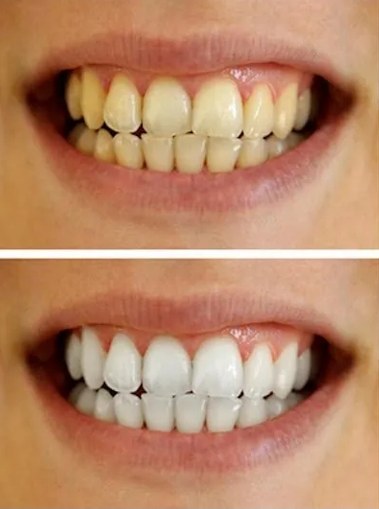
Dentist-supervised take-home whitening uses trays custom-made from impressions of your teen’s teeth, filled with a whitening gel the dentist chooses. Because the trays fit closely, the gel stays on the teeth and off the gums, and the dentist can pick a gentler strength for a teen and adjust the plan if sensitivity shows up.
In-office whitening uses a stronger gel applied at the dental office with the gums protected. It works faster, but teens are more likely to feel sensitivity with stronger gels.
Drugstore strips and kits are one-size-fits-all. They can work for some people, but they often cause gum irritation, whiten unevenly, and get overused. If your teen wants to try them, check with your dentist first and keep an eye on how often they’re used.
Book a whitening consultation at The Kid’s Place →
When Whitening Won’t Work
Whitening lifts stains from natural teeth. It won’t change everything:
- Fillings, bonding and crowns don’t whiten, so they can stand out after the natural teeth get lighter.
- White spots, such as the ones that sometimes show up after braces, can look more noticeable at first.
- Deep discoloration from an injured tooth, medication or enamel problems may need a different treatment, like bonding.
- Cavities and gum problems need to be treated first, since whitening gel on an open cavity can be painful.
Teens in braces should wait until the braces come off, so the teeth whiten evenly.
Making Results Last
Whitening results usually last months, not years. To help them last longer:
- Brush twice a day with fluoride toothpaste and floss daily
- Cut back on dark sodas, coffee, tea and sports drinks, or rinse with water after
- Keep up with regular cleanings, which remove surface stains
- Ask your dentist about occasional touch-ups with the same trays
Teen Whitening at The Kid’s Place in Boerne
At The Kid’s Place, we offer Opalescence® take-home whitening with custom-fitted trays. Dr. Michael K. Wilkerson, a board-certified pediatric dentist with over 30 years of experience, first checks that your teen’s permanent teeth are in and their teeth and gums are healthy, then recommends the right gel strength for your teen. We provide the custom trays and gel refills, and we’re here if sensitivity comes up.
If whitening isn’t the right fit, for example because of white spots or a single dark tooth, we’ll talk about other options like bonding. Teens finishing braces or clear aligners with us can plan whitening for after treatment.
Call us at (830) 239-5411 to schedule a whitening consultation, or book online.
Frequently Asked Questions
At what age can a teenager get their teeth whitened?
There's no single age. Dentists generally wait until the permanent teeth are in, which for many kids is around ages 12 to 14, and until the teeth and gums are healthy. The American Academy of Pediatric Dentistry recommends against whitening all the teeth while baby teeth are still present. A dental exam is the best way to know if your teen is ready.
Can teeth whitening damage a teenager's enamel?
Research shows whitening is safe and effective when the product's instructions are followed. Lab studies have raised questions about overuse, so the safe approach is short, dentist-supervised courses at the strength your dentist recommends, with cavities and gum problems treated first.
Can a teenager use whitening strips?
Over-the-counter strips are one-size-fits-all and often cause gum irritation, uneven results or overuse. The AAPD says any at-home whitening product a young patient uses should be supervised by an adult. Check with your dentist first; custom trays from a dentist are usually a safer choice.
How long does teeth whitening last for teens?
Usually months, not years. Dark sodas, coffee, tea and sports drinks bring stains back sooner. Brushing twice a day, regular cleanings and occasional touch-ups with the same custom trays help results last.
Does The Kid's Place offer teeth whitening for teens?
Yes. The Kid's Place in Boerne offers Opalescence take-home whitening with custom-fitted trays. Dr. Wilkerson checks that your teen's permanent teeth are in and their teeth and gums are healthy, then recommends the right gel strength. Call (830) 239-5411 to schedule a consultation.