
What to Do for Child Toothache: A Parent's Guide
Reviewed by Dr. Michael K. Wilkerson, DDS, pediatric dentist in Boerne, TX · Updated November 26, 2026

Last Updated: November 26, 2026
Quick Summary
When your child has a toothache, first check for emergency signs: facial swelling, fever, trouble swallowing or breathing, or an injury. If none apply, clean the area, ease the pain with a children’s pain reliever dosed by weight, and call your dentist. Pain that lasts, comes back, or wakes your child at night needs a dental visit soon.
- Swelling, fever or trouble swallowing? Get care right away.
- Check for stuck food first; floss gently between the sore teeth.
- Children’s acetaminophen or ibuprofen, dosed by weight. Never aspirin.
- Cold compress on the outside of the cheek, not heat.
- After hours? Text our emergency line: (432) 413-4357.
Table of Contents
- Is It an Emergency? Quick Triage
- Step 1: Look and Clean
- Step 2: Ease the Pain Safely
- Step 3: Comfort Measures (and What to Avoid)
- Step 4: Call the Dentist
- What the Type of Pain Can Tell You
- Signs of Infection You Shouldn’t Ignore
- Common Mistakes to Avoid
- Toothache Care at The Kid’s Place in Boerne
- Frequently Asked Questions
Is It an Emergency? Quick Triage
| What you see | What to do |
|---|---|
| Swelling spreading toward the eye or neck, trouble breathing or swallowing, or a high fever and very ill | Go to the emergency room or call 911 |
| Swelling of the face, cheek, jaw or gums; fever with tooth pain | Call the dental office now (after hours, text our emergency line) |
| A knocked-out adult tooth, or a broken tooth after a fall | Get dental care right away |
| Pain that wakes your child at night or comes back when medicine wears off | Call the dental office the same or next day |
| Mild pain or sensitivity that comes and goes, no swelling | Start home care and call during office hours |
A knocked-out adult tooth has the best chance of being saved within about an hour: hold it by the top (not the root), rinse briefly if dirty, keep it in milk, and get care fast. Don’t put a knocked-out baby tooth back in, but call us so we can check the area.
Step 1: Look and Clean
Sometimes a “toothache” is a popcorn hull or a seed stuck between teeth.
- Look in your child’s mouth with a flashlight.
- Floss gently between the sore teeth. Don’t snap floss into the gum.
- Brush gently around the area with a soft toothbrush.
- Kids old enough to spit can rinse with warm salt water (about ½ teaspoon of salt in a cup of warm water) and spit it out.
- Never use a toothpick, pin or anything sharp.
Step 2: Ease the Pain Safely
Children’s acetaminophen (like Tylenol) or ibuprofen (like Motrin or Advil) can ease tooth pain while you get your child seen. Ibuprofen also helps with swelling.
- Dose by weight, not age, using the package directions for the exact product you have.
- Use the dosing cup or syringe that came with it, never a kitchen spoon.
- Write down the time of each dose.
- Don’t double up. Many cold and fever medicines already contain acetaminophen.
- Check with your pediatrician, pharmacist or our team first if your child is under 6 months old, takes other medicines, has a health condition, or you’re unsure.
Step 3: Comfort Measures (and What to Avoid)
Helpful:
- A cold compress or wrapped ice pack on the outside of the cheek, 10 to 20 minutes at a time
- Soft, lukewarm foods, and chewing on the other side
- Propping your child’s head up a little at bedtime
Skip:
- Heat on a swollen cheek
- Very hot, cold or sugary foods and drinks
- Alcohol, hydrogen peroxide or essential oils on the gum
- Numbing gels with benzocaine for children under 2
Step 4: Call the Dentist
Home care buys time; it doesn’t fix the cause. Book a visit if your child has:
- Pain that lasts more than a day
- Pain that comes back when medicine wears off
- A dark spot, hole or chip in a tooth
- Sensitivity to hot or cold that lingers
- Any swelling
- Pain after a fall or sports injury
When you call, describe when the pain started, what makes it worse, any swelling or fever, and what medicine you’ve given. A clear photo of the gum or cheek can help, too.
Book a visit at The Kid’s Place →
What the Type of Pain Can Tell You
| Pain pattern | Possible cause | How soon |
|---|---|---|
| Sharp pain only when biting | Cavity, cracked tooth or stuck food | Within a few days, sooner if it gets worse |
| Pain that lingers after cold or sweets | Cavity reaching deeper into the tooth | Within a few days |
| Constant throbbing, or pain that wakes your child | Inflamed nerve or infection | Same or next day |
| Pimple-like bump on the gum, bad taste | Infection (abscess) | Same day |
| Dull ache in the back of the mouth, drooling, chewing on things | Teething or new molars coming in | Call if it lasts or there’s fever or swelling |
These are clues, not a diagnosis. Only an exam, and sometimes an X-ray, can tell for sure.
Signs of Infection You Shouldn’t Ignore
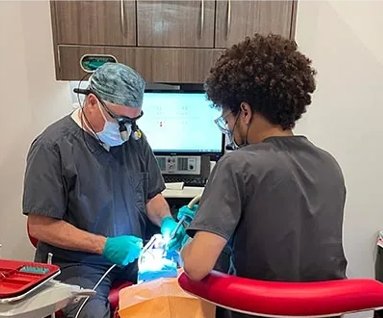
An untreated cavity can turn into a tooth infection (abscess). Call right away if you notice:
- A swollen cheek, jaw or gum
- A pimple-like bump on the gum, or a bad taste that won’t go away
- Fever, chills or your child seeming sick
- Throbbing pain that wakes your child at night
Common Mistakes to Avoid
- Waiting too long. A small cavity is a simple fix; an infection is not.
- Skipping the visit because the pain stopped. Sudden relief can mean the nerve has died, not that the tooth healed.
- Guessing the dose or mixing medicines with the same ingredient.
- Ignoring baby teeth. Some baby teeth stay until around age 12, and infection can affect the adult tooth underneath.
Toothache Care at The Kid’s Place in Boerne
If your child has a toothache, call us at (830) 239-5411. Our hours are Monday to Thursday, 8 a.m. to 5 p.m., and Friday, 8 a.m. to 1 p.m. For after-hours dental emergencies, text our emergency line at (432) 413-4357.
Dr. Michael K. Wilkerson, a board-certified pediatric dentist, has cared for Hill Country kids since 1993. For kids who are nervous about treatment, we use Soan painless numbing and offer sedation options. Our guide on helping an anxious child at the dentist can help you prepare.
Frequently Asked Questions
What can I give my child for a toothache?
Children's acetaminophen or ibuprofen can ease tooth pain while you get your child seen. Dose by your child's weight using the package directions and the dosing tool that came with it, and check with your pediatrician, pharmacist or our team if your child is under 6 months, takes other medicines, or you're unsure. Never give aspirin to children or teens, and never put any pill on the gum.
When is a child's toothache an emergency?
Get care right away if your child has swelling of the face, cheek or jaw, a fever with tooth pain, trouble swallowing or breathing, or a tooth that was knocked out or broken in an injury. Swelling spreading toward the eye or neck, or trouble breathing, needs the emergency room.
Should I wait to see if my child's toothache goes away?
A little sensitivity that goes away quickly can wait for a routine visit. But pain that lasts more than a day, comes back when medicine wears off, or wakes your child at night needs a dental visit soon. Pain that suddenly stops can mean the nerve has died, not that the tooth healed.
Do baby teeth with cavities need to be fixed?
Usually, yes. Baby teeth help kids chew and speak and hold space for the adult teeth, and some don't fall out until around age 12. An untreated cavity can lead to pain and infection. Your pediatric dentist will explain the options for your child.
What do I do if my child's toothache starts after hours?
Use the triage steps: clean the area, give a weight-based dose of a children's pain reliever if appropriate, and use a cold compress on the outside of the cheek. For a dental emergency after hours, text The Kid's Place emergency line at (432) 413-4357. For facial swelling with trouble breathing or swallowing, go to the emergency room.
🎮 Kids can test their tooth smarts with our free Dental Trivia Challenge.