
Best Age for First Dental Visit: Complete Guide
Reviewed by Dr. Michael K. Wilkerson, DDS, pediatric dentist in Boerne, TX · Updated November 26, 2026
Last Updated: November 26, 2026
Quick Summary
The best age for a child’s first dental visit is by the first birthday, or within six months of the first tooth, whichever comes first. The visit is short and gentle, and it’s as much about answering your questions as checking teeth. If your child is older and hasn’t been yet, the best time is now.
- First visit: by age 1, or within 6 months of the first tooth.
- Expect a quick, gentle check, often with your baby in your lap.
- You’ll get tips on brushing, fluoride, feeding, teething and pacifiers.
- Prepare toddlers two or three days ahead with simple, positive words.
- Older and haven’t gone yet? It’s not too late. Book now.
Table of Contents
- The Best Age for a First Dental Visit
- Why Start So Early?
- What Happens at the First Visit
- How to Prepare Your Child
- Home Care Between Visits
- Dental Milestones by Age
- If Your Child Is Nervous
- First Visits at The Kid’s Place in Boerne
- Frequently Asked Questions
The Best Age for a First Dental Visit
The American Academy of Pediatric Dentistry and the American Academy of Pediatrics recommend a first dental visit by the first birthday, or within six months of the first tooth coming in, whichever comes first.
Many parents think dental visits can wait until a child has all their baby teeth or starts school. But cavities can start soon after the first teeth appear, and baby teeth matter: they help kids chew and speak, and they hold space for the adult teeth.
Why Start So Early?
- Catch cavities early. Tooth decay is one of the most common childhood diseases, and it’s largely preventable. Early white spots can sometimes be stopped before they become cavities.
- Get answers for your family. How much toothpaste? Is this pacifier OK? When should we stop the bottle? The first visit is a chance to ask.
- Build a dental home. If your child ever has a toothache or a fall, you already know who to call.
- Make the dentist feel normal. Kids whose first visits are calm check-ups, not emergencies, are more likely to feel comfortable later.
- Watch how teeth and jaws develop. Regular visits let the dentist spot bite or spacing problems early.
What Happens at the First Visit
A first visit is usually short. Here’s what it often includes:
- Questions about your child: health history, feeding, brushing, and any worries you have.
- A gentle look at the teeth, gums, tongue and bite. Babies and young toddlers are often checked while sitting in a parent’s lap, knee-to-knee with the dentist.
- A cleaning if needed, and a fluoride treatment for kids at higher risk for cavities.
- Tips for home: toothpaste amount, brushing positions, bottles and cups, pacifiers and thumb-sucking, and teething.
- A plan for when to come back.
X-rays usually aren’t needed at a first visit. Your dentist will take them later only if your child needs them.
How to Prepare Your Child
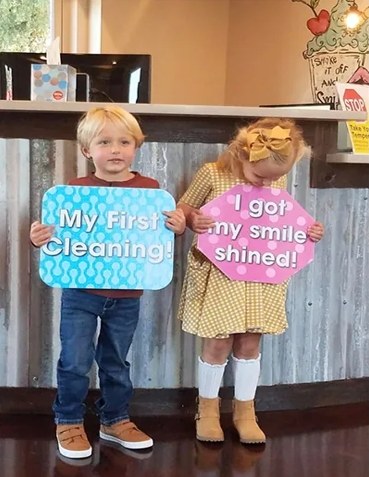
- Talk about it two or three days ahead, in simple, positive words: “The dentist will count your teeth and make sure they’re healthy.”
- Read a picture book about going to the dentist.
- Play dentist at home: count each other’s teeth with a toothbrush.
- Skip scary words like “shot,” “drill” and “hurt,” and don’t promise “it won’t hurt.”
- Pick a good time when your child is usually rested and fed.
- Bring a comfort item, your child’s toothbrush and toothpaste, and a list of any medicines.
Our guide on preparing a toddler for a first dental cleaning has more ideas, and parents are welcome in the room for exams and cleanings. See whether parents can stay during a dental exam.
Book your child’s first visit at The Kid’s Place →
Home Care Between Visits
What you do at home matters as much as the visits. The American Academy of Pediatric Dentistry’s home care tips line up with these basics:
- Wipe your baby’s gums before teeth come in.
- From the first tooth, brush twice a day with a rice-grain smear of fluoride toothpaste; switch to a pea-sized amount at age 3.
- No bottle of milk, formula or juice in bed.
- Water between meals; limit juice and sweet snacks.
- Floss once teeth touch.
Our baby oral care checklist and guide to preventing baby bottle tooth decay go step by step.
Dental Milestones by Age
| Age | What’s typical | What to do |
|---|---|---|
| Around 6 months | First tooth often appears (timing varies a lot) | Start brushing with a rice-grain smear |
| By age 1 | Several front teeth | First dental visit |
| Around 12 to 18 months | First molars | Wean from the bottle |
| Around age 3 | All 20 baby teeth are usually in | Switch to a pea-sized amount of toothpaste |
| Around age 6 | First baby teeth loosen; 6-year molars come in | Ask about sealants |
| By age 7 | Adult front teeth and first molars | Orthodontic check |
Wondering about loose teeth? See when baby teeth start falling out.
If Your Child Is Nervous
Some kids walk right in; others cling to a parent. Both are normal. A good pediatric team goes slowly, explains each step in kid words, and lets your child touch the mirror or watch the toothbrush first. If your child is very anxious, ask about an acclimation visit to meet the team and try the chair before any treatment. Our guide on helping an anxious child at the dentist has more.
First Visits at The Kid’s Place in Boerne
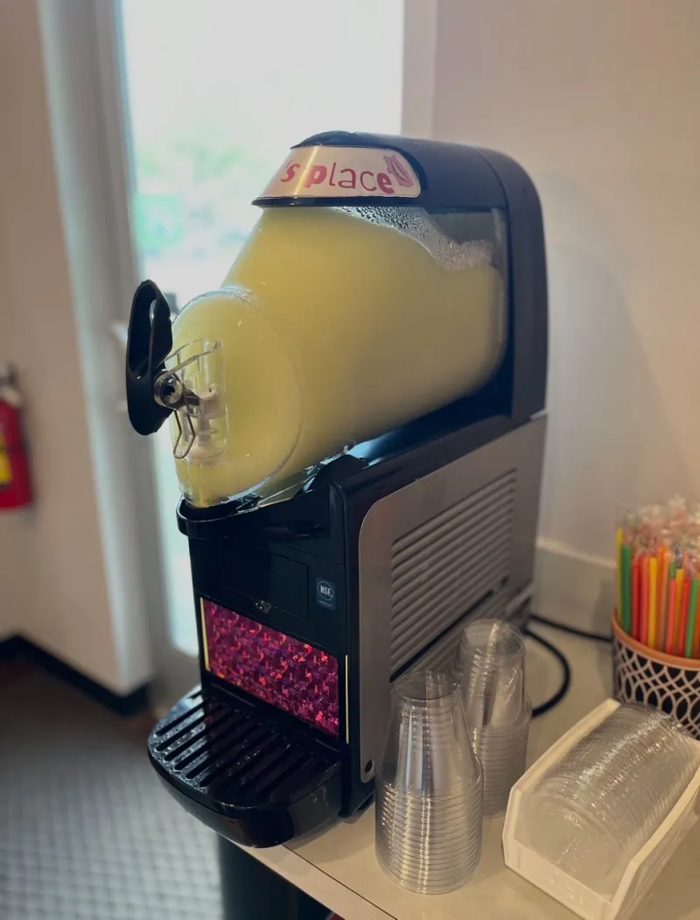
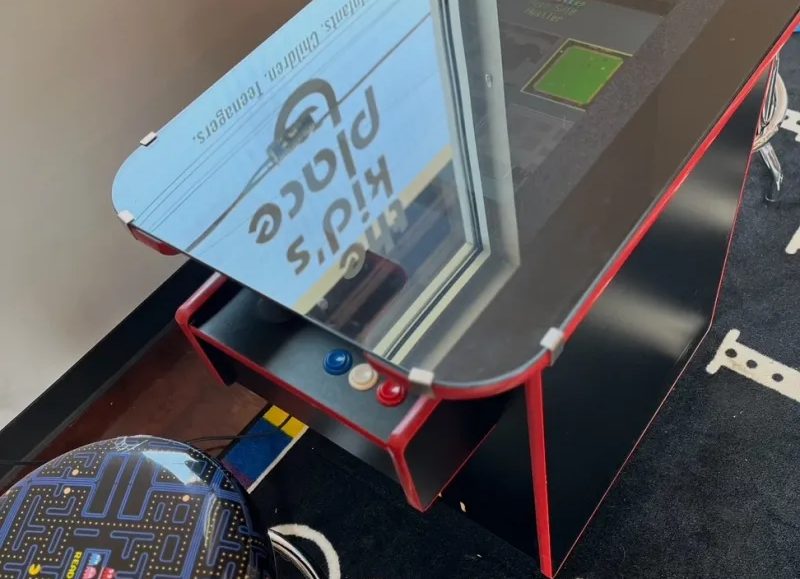
Dr. Michael K. Wilkerson, a board-certified pediatric dentist, has cared for Hill Country kids since 1993, and our kids-only office is made to make first visits fun, with arcade games, movies and free slushies.
Ready to book? Call us at (830) 239-5411 or book online. See what to expect at your first visit on our homepage.
Frequently Asked Questions
What is the best age for a child's first dental visit?
By the first birthday, or within six months of the first tooth coming in, whichever comes first. That's the recommendation from the American Academy of Pediatric Dentistry and the American Academy of Pediatrics.
My child is 3 and hasn't seen a dentist. Is it too late?
Not at all. Book a visit now. Many kids have their first visit later than age 1, and it's still the best way to catch problems early and start good habits. Just mention it when you call so we can plan a gentle first visit.
What happens at a baby's first dental visit?
It's short and gentle. The dentist looks at your baby's teeth, gums and mouth, checks for early white spots, and talks with you about brushing, fluoride, feeding, teething and pacifiers. Many babies are checked while sitting in a parent's lap. X-rays are usually not needed at a first visit.
Do I need a pediatric dentist or can we see a family dentist?
Either can see young children. Pediatric dentists complete two to three extra years of training focused on infants, children, teens and kids with special needs, and their offices are set up for kids. Choose the office where your child feels comfortable and that sees babies and toddlers.
How do I prepare my toddler for the first visit?
Talk about it two or three days ahead in simple, positive words, read a picture book about the dentist, and play dentist at home by counting each other's teeth. Book a time when your child is usually rested, and bring a comfort item.
🎮 Kids can test their tooth smarts with our free Dental Trivia Challenge.