
Does Early Orthodontic Treatment Prevent Braces?
Reviewed by Dr. Michael K. Wilkerson, DDS, pediatric dentist in Boerne, TX · Updated November 26, 2026
Last Updated: November 26, 2026
Quick Summary
Early orthodontic treatment can prevent or simplify braces for some kids, but it’s not a guarantee. It works best for problems that are easier to fix while a child is growing, like a crossbite or a narrow upper jaw. Many children still need a second phase of braces or aligners later, though it may be shorter and simpler.
- First orthodontic check-up: by age 7.
- Early treatment is most useful for crossbites, narrow jaws and some bite problems.
- Many kids still need braces later; ask how likely that is for your child.
- Mild crowding or spacing often can wait.
- Ask what happens if you wait a year before deciding.
Table of Contents
- What Early Orthodontic Treatment Is
- Can It Prevent Braces? The Honest Answer
- Signs Your Child Should Have an Early Check
- Phase 1 vs. Phase 2
- Common Early Appliances
- How to Decide: 4 Questions to Ask
- Insurance and Cost
- Early Orthodontics at The Kid’s Place in Boerne
- Frequently Asked Questions
What Early Orthodontic Treatment Is
Early orthodontic treatment, also called interceptive orthodontics or Phase 1, is treatment that starts while a child still has a mix of baby and adult teeth, usually between about ages 7 and 10. Instead of lining up every tooth, it focuses on problems that are easier to fix while the jaw is growing: a crossbite, a narrow upper jaw, severe crowding, or teeth at risk of injury.
The American Association of Orthodontists recommends a first orthodontic check-up by age 7. Most children that age don’t need treatment yet. The check-up shows whether to treat now, watch and wait, or do nothing. For more background, see our guide to early interceptive orthodontics.
Can It Prevent Braces? The Honest Answer
Sometimes. For some problems, early treatment can make later braces unnecessary or much simpler. For example, widening a narrow upper jaw in childhood is usually easier than in the teen years or adulthood, when the jaw has stopped growing.
But not always. Many children who have early treatment still need braces or aligners after their adult teeth come in. Early treatment is best thought of as fixing a specific problem at the best time, not as a way to skip braces.
The research is mixed, too. A Cochrane review of children with prominent upper front teeth found that early two-phase treatment lowered the risk of injury to those teeth, but showed no other clear advantages over a single course of treatment in the teen years. That’s why the right answer depends on your child’s specific problem.
Signs Your Child Should Have an Early Check
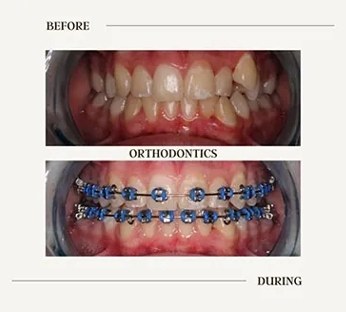
- Baby teeth lost very early or very late
- Upper back teeth that sit inside the lower teeth when biting (crossbite)
- Lower front teeth in front of the upper teeth (underbite)
- Upper front teeth that stick out a lot
- Crowded or blocked-out adult teeth
- A jaw that shifts to one side when closing
- Thumb or finger sucking past age 5
- Mouth breathing or snoring
- Trouble chewing or biting
Phase 1 vs. Phase 2
| Phase 1 (early) | Phase 2 (comprehensive) | |
|---|---|---|
| Typical age | About 7 to 10 | About 11 to 14 |
| Goal | Fix bite and jaw problems, make room | Line up all the adult teeth |
| Typical length | Often about a year | Often 1½ to 2½ years |
| Common appliances | Expander, space maintainer, partial braces | Full braces or clear aligners |
Every child is different; your dentist will give you a timeline for your child.
Book an orthodontic check at The Kid’s Place →
Common Early Appliances
| Appliance | What it does | Good to know |
|---|---|---|
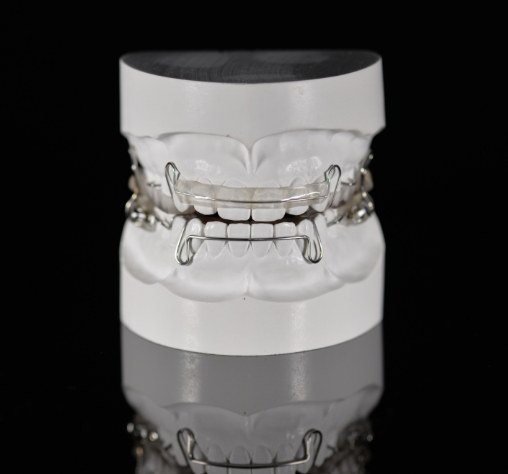
| Palatal expander | Widens a narrow upper jaw | Fixed; parents usually turn a key for a few weeks, then it stays in for months. See how long kids wear expanders. |
| Space maintainer | Holds space when a baby tooth is lost early | Stays in until the adult tooth comes in |
| Partial braces | Straightens a few front teeth | Shorter than full braces; doesn’t replace Phase 2 |
| Functional appliance | Helps guide jaw growth for some overbites or underbites | Removable ones only work if worn as directed |
| Habit appliance | Helps stop thumb sucking or tongue thrust | Works best with encouragement at home |
How to Decide: 4 Questions to Ask
- What problem will this fix? A crossbite or jaw shift is different from mild crowding.
- What happens if we wait a year? A good answer explains what would get harder, not just “it’s better to start now.”
- How likely is a second phase? And what would it involve?
- Is my child ready? Can they keep up with brushing, expander turns or wearing a removable appliance?
If the problem is real, the timing matters, and your child is ready, early treatment often makes sense. If not, watching and waiting is a perfectly good plan. Our guide on preparing a child for orthodontic appliances helps once you decide, and does early orthodontic treatment hurt? covers comfort.
Insurance and Cost
Many dental plans include orthodontic benefits for children, often with a lifetime maximum that’s shared between Phase 1 and Phase 2. Before starting, ask:
- What’s the total fee for Phase 1, and what does it include?
- What will insurance pay, and is there a waiting period or age limit?
- Will using benefits now leave less for Phase 2?
Our guide to whether dental insurance covers orthodontics explains the details.
Early Orthodontics at The Kid’s Place in Boerne
Dr. Michael K. Wilkerson, a board-certified pediatric dentist, has cared for Hill Country kids since 1993 and provides orthodontic care in the same kid-friendly office your child already knows. Start with an orthodontic consultation: a paid visit with diagnostic records and Dr. Wilkerson’s exam, so you leave knowing whether to treat now, wait and watch, or skip treatment. If insurance denies an orthodontic claim, our front office will file the appeal for you.
Learn more about orthodontics for kids in Boerne, or call us at (830) 239-5411.
Frequently Asked Questions
Does early orthodontic treatment prevent braces?
Sometimes, but not always. Early treatment can fix problems like a crossbite or a narrow jaw while a child is growing and can make later treatment shorter or simpler. Many children still need braces or aligners after their adult teeth come in. Ask your dentist what early treatment will fix and how likely a second phase is.
What age is best for early orthodontic treatment?
The American Association of Orthodontists recommends a first orthodontic check-up by age 7. That doesn't mean treatment starts then; most children don't need anything yet. When early treatment is needed, it usually happens between about ages 7 and 10, while the jaw is still growing.
Is early orthodontic treatment worth it?
It depends on the problem. For some issues, like crossbites, a narrow upper jaw, or very prominent front teeth at risk of injury, early treatment can help. For mild crowding or spacing, waiting is often fine. A research review found early treatment for prominent upper teeth lowered the risk of front-tooth injuries, but showed few other advantages over treating in the teen years.
What is Phase 1 and Phase 2 orthodontic treatment?
Phase 1 is early treatment, usually between ages 7 and 10, focused on jaw growth, bite problems and making room for adult teeth. Phase 2, if needed, comes after most adult teeth are in, usually around ages 11 to 14, with braces or aligners to line up the teeth.
Does insurance cover early orthodontic treatment?
Many dental plans include orthodontic benefits for children, often with a lifetime maximum that's shared between Phase 1 and Phase 2. Ask about waiting periods, age limits and pre-authorization before treatment starts. At The Kid's Place, our front office will file an appeal for you if an orthodontic claim is denied.
🎮 Kids can test their tooth smarts with our free Dental Trivia Challenge.